
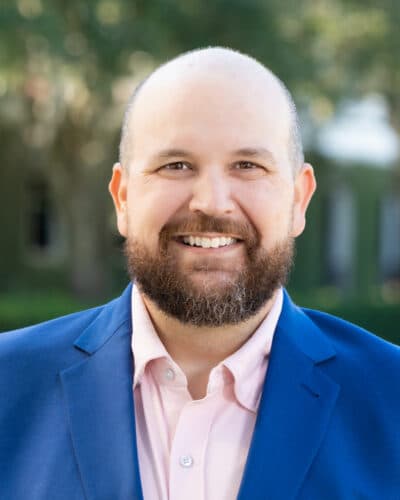
“Most underperforming hotels are not bad assets. They are assets being run against the wrong plan.”
Founder, PivotPt Capital
PivotPt Capital exists because of a view Phil Bernardo formed on property rather than in a spreadsheet: a large share of independent and select-service hotels underperform for operating reasons that are identifiable, correctable, and routinely mispriced at acquisition. Fifteen years spent on both sides of the owner and operator conversation is what makes that view actionable instead of theoretical.
From the Property Up
Phil spent roughly five years on property with Marriott International and a leading third-party management company, working across rooms, front office, and food and beverage. He moved into commercial strategy at Universal Orlando Resort, where he built the group reservations analytics framework that increased group bookings 15 percent and led the selection of the department’s analytics stack, then to Disney Parks and Experiences, where he ran demand forecasting and real-time commercial decision support through the most volatile lodging demand environment in modern record. The practical result is the ability to challenge a weekly forecast, a pace report, or a revenue management strategy on the merits, rather than reading the variance after the quarter closes.
The Owner’s Side of the Table
At Xenia Hotels and Resorts (NYSE: XHR), Phil supported the asset management function for a nationally diversified upscale and luxury lodging portfolio, building the performance reporting used to monitor asset health and to flag hotels requiring operational intervention or capital investment. He then founded and led an independent lodging management company that scaled past 70 properties across multiple states, owning the P&L, business plans, brand and quality standards, capital and FF&E decisions, and every owner-facing conversation. He also managed its wind-down. That experience is directly reflected in how PivotPt underwrites: operating assumptions, revenue concentration, and downside cases are stress-tested before they are accepted, and broker-stated NOI is treated as a claim to be verified rather than a starting point.
Measured Against the Underwriting
As Director of Revenue Management and Data Analytics at Hillpointe, Phil owned commercial performance across a national portfolio and built the practice of measuring realized asset performance against the original underwriting, isolating precisely where rent, absorption, timeline, and expense assumptions held or failed, then feeding those findings back into forward forecasts. He architected the cloud analytics platform that delivered portfolio-level performance and forecast visibility to executives and investment stakeholders, and managed the analyst team behind it.
Time Inside a Global Brand
Phil has also worked inside the growth organization at Hyatt Hotels Corporation, directing development and feasibility analytics: market and site selection, deal evaluation, competitive positioning, and review of pro forma assumptions before deals advance. That seat provides direct visibility into how a brand evaluates an asset, sets reinvestment and PIP expectations, and responds to owner pressure, which is information most acquirers are forced to infer.
At PivotPt
Phil underwrites every acquisition personally: pro forma construction, ADR and RevPAR build-ups, departmental and undistributed expense modeling, NOI and stabilized valuation, cap rate and IRR analysis, PIP and capex budgeting, debt sizing, and sensitivity testing. He built the sourcing and screening platform that evaluates more than 7,100 lodging parcels against defined investment criteria, including brand reinvestment and PIP exposure and loan maturity risk. The underlying principle is that surfacing a risk early is worth more than accepting a projection at face value.